Breaking through to the other side!
There comes a point in a photographer's life where they feel like they can't improve anymore. They seem to get into a rut and cannot get inspired by their craft. It can be discouraging and disheartening when this wall is hit because he/she seems to lose that creative edge. Some feel they lack the creativity to continue. I recently went thru this phase. In fact, its not the first time either. Two years ago, I was sitting in a class room debating this topic. At that time I was told by my instructor to push thru it. I was feeling like I lost my MOJO. I did not think I could create anything new and I was no longer excited about photography. He was right. It took me about 3 months, but I was able to gain back that creative desire. I found myself looking at photography in a new light.
In fact, this happened again recently. I was feeling uninspired and lacked the desire to create. And, once again I was reminded that I need to get out and just photograph anything and everything. My lack of enthusiasm stemmed from my lack of sales. It had been over a month since my last sale and I felt like I was losing my mojo.
I have discovered that I need to be patient when it comes to selling artwork. Thursday, I had a lengthy discussion with about a dozen colleagues that seem to think that I was not being realistic. I had become rather discouraged by the fact that I had not had any sales at Art Basel in Miami. This was compounded by the fact that I had spent quite of bit of cash on producing prints to show at the event.
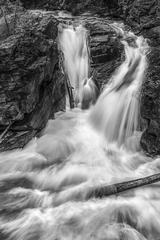 But, my luck changed this afternoon. I found out that I sold a very large photograph from Glacier National Park.
What it means to me is that I need to be a bit more patient and not get discouraged so easily.
<a href="http://fineartamerica.com/art/all/scenery/canvas+prints" style="font: 10pt arial; text-decoration: underline;">scenery canvas prints</a>
My ways of improving a composition, Working the Subject!
What happens when I photograph a scene?
First,I go through a thought process that involves rather simplistic and basic rules. I check for an interesting foreground subject. Whether it is a plant,dead tree,shrub,rock or any other subject for my foreground. I look thru the viewfinder and place that subject near the bottom right or left corners. I then make sure there are not any distracting elements such as additional rocks, leaves or plants around my "subject". The image is then divided into thirds in the viewfinder. I make sure my sky is either 1/3 or the background or 2/3 of the background. If the sky has lots of color and clouds, thats a bonus! If there are no clouds, then I choose to include less sky. I the that the camera is level and the start pressing the shutter, varying the exposure to make sure I have the perfect shot. I will also vary the focus depth for added control later when I process the image. I will try different perspectives and angles of the foreground subject in relation to the background also. This is called "working the subject."
<a href="http://fineartamerica.com/art/photographs/sun/canvas+prints" style="font: 10pt arial; text-decoration: underline;">sun photo canvas prints</a>


How long does it take me to prepare a photograph for publishing?
This is a very good question. There is not right answer or a specific timetable. On average a photograph that I take in during my travels can take anywhere from 15 minutes to "give it my Mojo" or years. I have learned, very recently," that a photograph has no timetable for when its ready. I would like to be able to process it rather quickly, but that may not happen. For example, I took a series of photographs in January of 2010. I knew they were good, but until I actually had the skills necessary, I was unable to process them correctly. Yes it was frustrating, but I didnt know what skills were needed. In the future, I might have to reprocess them again, depending upon my skill set. In other words, there is actually no timetable. I might be able to show my vision or what I saw in the camera, quickly or it might take years!
<a href="http://fineartamerica.com/art/photographs/reflection/originals" style="font: 10pt arial; text-decoration: underline;">reflection photo originals</a>

My Story! How a retired dentist finds passion in Landscape Photography
I graduated from dental school in 1993. This was after 4 years of undergraduate work and 4 years of earning a degree in dentistry. After 8 years of schooling I was ready to finally hit the job market! I worked as an associate for about two years before I decided it was time to take the plunge and buy an existing dental practice. I practiced for 15 yrs in two different locations. And, I loved my job! I was so excited to help people with their mouths. It was an obsession, a hobby, and it was fun for me!. I would even go to the office an hour early just to be in the environment. I loved the problem solving, the case building and the camaraderie with other specialists. I was very proud of my accomplishments and what I had achieved!
That all came to a crashing halt in August of 2010, when medical issues prevented me from doing a great job and it became dangerous for the patients. I was stressed and I developed a short temper. When I informed the staff of my medical issues, they were not surprised. They had watched me struggle for a year with simple procedures and wondered what was going on.
I decided that the best option was to sell the office and try something else. I had no choice either. It was better than causing any harm to a patient. I decided that I would try my hand at photography. So, I started taking courses at Delray Beach Center for the Arts, Palm Beach Photographic Center and Various workshops across the country. I tried all genre's of photography. I tried still life, street photography, portraiture, wildlife, and landscape. It was after my first "real" landscape photography workshop that I became impassioned again.
I found something that I loved to do! I developed a keen eye and skills in the digital darkroom that enabled me to explore my inner voice and show others what I had achieved.
I had truly come full circle to the "hobby" that I participated in as a child, but this time it is different. I used my creativity to help people before, but now I'm creating art to inspire people.
<a href="http://fineartamerica.com/art/photographs/reflection/all" style="font: 10pt arial; text-decoration: underline;">reflection photos</a>
How does the Human Eye Visualize a Photograph?
A photographer can do the same thing and direct a viewer's eye through an a photograph. A great composition can hold a persons attention in specific areas that are sharper than others. When composed well, the photographer can take a viewer on a "journey" throughout a picture directing their eyes to primary elements and then secondary elements. The successful photograph will have elements organized in a specific manner.The difference between a snapshot and a great photograph is what distinguishes an artist from ordinary people.

<a href="http://fineartamerica.com/art/all/artwork/framed+prints" style="font: 10pt arial; text-decoration: underline;">artwork framed prints</a>